


Механикаи классикӣ
Механикаи классикӣ, ки ҳамчун Механикаи Нютонӣ низ ном бурда мешавад як ҷабҳаи физика буда, ҳаракати ҷирмҳои макроскопиро меомӯзад. Ба ҷирмҳои макроскопӣ аз тири гулӯла сар карда то қисмҳои машинасозӣ ва ҷирмҳои астрономие монанди киштии кайҳонӣ, сайёраҳо, ситораҳо ва галактикаҳо медароянд. Ин ҷабҳаи қадимтарини илму текнолоҷӣ буда, дар маҳдудияти ҳодисаҳои макроскопӣ натиҷаҳои хеле муайяну саҳеҳро медиҳад.
Ба ғайр аз ин, ихтисосҳои бисьёри дигар ҳастанд, ки бевосита ба механикаи классикӣ иртибот доранд. Барои ҷирмҳое ки бо суръати баланд (наздик ба суръати рӯшноӣ) ҳаракат мекунанд механикаи классикӣ бо нисбияти махсус ҳамҷоя омӯхта мешавад. Боз ҳам барои чуқуртар омӯхтани қувваи ҷозиба дар механикаи классикӣ аз нисбияти умумӣ низ истифода бурда мешавад.
Дар физика, механикаи классикӣ яке аз ду ҷабҳаест, ки илми механикиро меомӯзанд. Илми механикӣ гуфта, маҷмӯаи қонунҳои физикиро гӯянд, ки ҳаракати ҷисмҳои физикро бо роҳи математикӣ тавсиф мекунанд. Ҷабҳаи дуввумин механикаи квантист.
Тавсифи назарӣ[вироиш | вироиши манбаъ]

Мафҳумҳои асосии механикаи классикӣ чунинанд. Одатан, ҷирмҳои ҷаҳони реал дар механикаи классикӣ бо зарраҳои нуқтавӣ иваз карда мешаванд. Заррааҳои нуқтавӣ, ё ин ки нуқтаҳои материалӣ гуфта он ҷирмҳоеро менонамнд, ки ҳангоми ҳаракат ченакашон ба назар гирифта намешавад. Ҳаракати нуқтаи материалӣ бо чанде аз параметрҳо тавсиф сохта мешавад: мавқеъи он, масса ва қуввае ки ба он таъсир мекунад.
Дар ҳақиқат, ҳамаи ҷирмҳое ки механикаи классикӣ тавсиф мекунад ҳамеша ченаки носифрии муайянеро дороанд. Физикаи ҷирмҳои ченакашон хурд бошад бо механикаи квантӣ саҳееҳтар омӯхта мешавад. Ҷирмҳои ченакашон носифрӣ табиати мукаммалтар доранд, вале ба ҳар ҳол натиҷаи донише ки механикаи классикӣ барои нуқтаҳои материалӣ медиҳад дар омӯхтани он ҷирмҳои пур аз маҷмӯъи нуқтаҳои материалӣ ба кор меояд. Маркази массаи ҷирмҳои мукаммал мисли нуқаи материалӣ ҳаракат мекунад.
Кӯчиш ва ҳосилаҳои он[вироиш | вироиши манбаъ]
Кӯчиш, ё мавқеъи нуқтаи материалӣ аз рӯи нуқтаи муқаррари ихтиёрии О дар фазо, ки одатан нуқтаи ибтидои системаи сарҳисоб ба шумор меравад, муайян намуда мешавад. Он ҳамчу вектори r аз O то ба нуқта муайян карда мешавад. Умуман, худи нуқтаи материалӣ нисбат ба O метавонад стационар (муқаррар) набошад, аз ин рӯ r функцияи вақти гузашта нисбат ба вақти ихтиёрии ибтидоӣ, t, аст. Дар назарияи нисбияти пеш аз Эйнштейн (ҳамчу нисбияти Галилео маъруф аст), вақт чун бузургии мутлақ ба ҳисоб мерафт, яъне фосилаи вақти байни ду ҷуфти ҳодиса байни ҳамаи мушоҳидон баробар буд. Илова бар мафҳуми вақти мутлақ, механикаи классикӣ фарзияи ҳандасаи Уқлидусро барои сохти фазо истифода мебарад.
| Дар ҳосилаи воҳидҳои СИ бо кг, м ва с | |
| мавқеъ | м |
| суръат | м с−1 |
| шитоб | м с−2 |
| шитобнокӣ | м с−3 |
| моменти инерция | кг м² |
| импульс | кг м с−1 |
| моменти импульс | кг м² с−1 |
| қувва | кг м с−2 |
| моменти қувва | кг м² с−2 |
| энергия | кг м² с−2 |
| тавоноӣ - иқтидор | кг м² с−3 |
| фишор | кг м−1 с−2 |
| шиддати сатҳӣ | кг с−2 |
Суръат ва зудӣ[вироиш | вироиши манбаъ]
Суръат, ёхуд зудии тағйири мавқеъ бо вақт, ҳамчу ҳосилаи мавқеь нисбат ба вақт ё

муайян карда мешавад.
Дар механикаи классикӣ, суръат хосияти ҷамъшавандагӣ ёки тарҳшавандагиро дорад. Масалан, агар машинае ки бо суръати 60 км/соат ба самти Шарқ ҳаракат дорад, аз назди машинаи дигари бо суръати 50км/соат ба самти Шарқ ҳаракат истода гузарад, аз нуқтаи назари машинаи оҳиста, машинаи тез бо суръати 60 − 50 = 10 км/соат ба самти шарқ ҳаракат дорад. Валекин аммо, аз нуқтаи назари машинаи тез ҳаракаткардаистода, машинаи оҳиста бо суръати 10 км/соат ба самти Ғарб ҳаракат дорад. Суръатҳо ҳамчу бузургиҳои векторӣ ҷамъ карда мешаванд, яьне ҳангоми бо он сарукор доштан аз таҳлили векторҳо бояд истифода бурд.
Аз ҷиҳати математикӣ гӯем, агар суръати ҷирми аввалиеро ки дар боло мубоҳиса кардем бо вектори ва суръати ҷирми дуввумро бо вектори ишорат намоем, пас суръати ҷирми аввал аз нуқтаи назари ҷирми дуввум ба


ва худи ҳамин хел:

баробар аст. Ин ҷо зудии ҷирми аввал, зудии ҷирми сонӣ, ва векторҳои воҳидиенад, ки мутаносибан дар самти ҳаракати ҳар ду ҷирм ҳастанд.


Агар ҳар ду ҷирм ба як сӯ ҳаракат кунанд, он гоҳ ин муодиларо метавон мухтасар навишт:
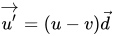
Ё ин ки агар самтро ба назар нагирем, фарқи онҳоро метавон танҳо дар асоси зудиҳо навишт:

Шитоб[вироиш | вироиши манбаъ]
Шитоб, ёхуд зудии тағйири суръат, ин ҳосилаи суръат аз вақт (ҳосилаи тартиби дуввуми мавқеъ аз вақт) аст ё
- .

Шитоб метавонад аз тағйири бузургии суръат бо гузашти вақт, ё аз тағйири самти суръат бо гузашти вақт ва ё аз ҳисоби ҳарду пайдо шавад. Агар танҳо бузургии суръат, , кам шавад, инро баъзан даранг меноманд, аммо умуман ҳар гуна тағйири суръат бо гузашти вақт, ҳамчунин даранг, ба таври одӣ шитоб номида мешавад.
Системаҳои сарҳисоб[вироиш | вироиши манбаъ]
Вақте ки гап дар бораи мавқеъ, суръат ва шитоби ҷисм дар нуқтаи ихтиёрии сарҳисоб ва дар системаи сарҳисоби ҳамроҳ меравад, механикаи классикӣ мавҷудияти оилаи махсуси системаи сарҳисобро фарз мекунад, ки дар онҳо қонунҳои механикӣ шакли қиёсан оддитарро мегиранд. Ин гуна системаҳои сарҳисоби махсусро системаҳои сарҳисоби инерциалӣ меноманд. Системаҳои сарҳисоби инерсиалӣ гуфта ситемаҳоеро меноманд, ки байни ҳар дутои онҳо ҳаракати ростхатта вуҷуд дорад ва дар натиҷаи қувва гузоштан ба ин ё он ҷисм дар системаи сарҳисоби инерсиалӣ он ҳаракати собитшитоб мекунад. Ҳар гуна системаҳои сарҳисоби ноинерсиалӣ нисбат ба системаҳои сарҳисоби инерсиалӣ бошитоб ҳаракат хоҳад кард ва ҷисми дар ин система ҷойгиршуда новобаста аз таъсири қувваи ба он додашуда ҳаракати бошитоб хоҳад кард. Заифии мафҳуми системаҳои сарҳисоби инерсиалӣ дар набудани ягон услуби кафолатдиҳандаи дарёфтани системаҳои инерсиалӣ аст. Барои мақсадҳои амалӣ, системаҳои сарҳисобе ки нисбат ба ситораҳои дар масофаи дур ҷойгиршуда бешитоб ҳаракат доранд, шабеҳии хуб ба системаҳои инерсиалӣ ҳастанд.
Дар бораи нисбияти ҳодисае дар ду системаи инерсиалӣ, ва , ки яке аз дигаре бо суръати нисбии ҳаракат дорад, метавон чунин натиҷаҳоро ҷамъбаст кард.


- (суръати зарра аз назари S' нисбат ба суръати он аз назари S ба миқдори паст мешавад)
- = (новобаста аз системаи сарҳисоб шитоби ҷисм доимӣ боқӣ мемонад)
- = (новобаста аз системаи сарҳисоб қувваи ба ҷисм таъсиркунанда доимӣ боқӣ мемонад)
- F' = F (чунки F = ma, ва агар m доимӣ боқӣ монад)
- дар механикаи классикӣ суръати рӯшноӣ доимӣ нест, ва ҳамчунон дар механикаи нисбият низ ба суръати рӯшноӣ мавқеъи хоссае дода нашудааст
- шакли муодилаҳои Максвелл аз як системаи сарҳисоби инерсиалӣ ба дигараш бетағйир боқӣ намемонад. Ба ҳар ҳол, дар назарияи нисбияти Эйнштейн фарзияи доимӣ (инвариант) будани суръати рӯшноӣ муносибати байни системаҳои инерсиалиро чунон тағйир медиҳад, ки дар натииҷа муодилаҳои Махвелл инвариант боқӣ мемонанд.


Қувваҳо; Қонуни дуюми Нютон[вироиш | вироиши манбаъ]
Нютон аввалин нафарест, муносибати байни қувва ва импулсро дар шакли математикӣ ифода намудааст. Аз рӯи таъбири баъзе физикҳо қонуни дуввуми Нютон ин таърифи қувва ва масса аст ва бархи дигар дар ақидаи онанд ки ин постулати фундаменталӣ буда, қонуни табиат аст. Ҳарду таъбир оқибати ягонаи математикӣ доранд, ки таърихан ҳамчу "Қонуни дуввуми Нютон" ном бурда мешавад:
- .

Бузургии импульси каноникӣ ном бурда мешавад. Баробартаъсиркунандаи қувваҳо ба ҷисм он гаҳ ба тағйири импульси ҷисм бо вақт баробар аст. Одатан, массаи ҷисм m бо гузашти вақт доимӣ буда, қонуни дуввуми Нютон дар шакли содатар чунин навишта мешавад


дар ин ҷо бузургии шитоб аст. Вале ҳама вақт ҳам m аз t новобаста нест. Масалан, массаи ракета бо хориҷшавии сӯзишвориаш кам шудан мегирад. Дар ин гуна ҳолатҳо муодилаи болоӣ хато буда шакли пурраи қонуни дуввуми Нютон бояд истифода бурда шавад.

Ҳамаи қувваҳо асосан ба чор гурӯҳ тақсим мешаванд: қувваи ҷозиба, қувваи заиф, электромагнетизм ва қувваи қавӣ.
Энергия[вироиш | вироиши манбаъ]
Агар қувваи ба зарра таъсир карда шавад ва дар натиҷа зарра ба миқдори кӯчиш кунад, кори аз ҷониби қувва кардашуда аз рӯи ҳосили зарби скалярии векторҳои қувва ва кӯчиш муайян карда мешавад:

- .

Агар массаи зарра доимӣ бошад, он гаҳ кори пурраи бар зарра кардашуда, Wпурра, бино бар қонуни дуввуми Нютон аз рӯи ҳосили ҷамъи корҳои алоҳидаи ҳар як қувва муайян карда мешавад:
- ,

ин ҷо Ek ро энергияи кинетикӣ меноманд. Барои зарраи материалӣ ин миқдори корест ки ба зарраи дар ибтидо ором суръати муайяни v бахшидааст:
- .
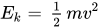
Барои ҷисмҳои мураккаб ки аз зарраҳои зиёд ташкил ёфтаанд, энергияи кинетикии ҷисми мураккаб ба ҳосили ҷамъи энергияи кинетикии ҳар зарра иборат аст.
Қувваҳои дигар намуде низ мавҷуданд, ки қувваҳои консервативӣ ном бурда мешаванд ва ҳамчу градиенти функцияи скалярии Ep, ки энергияи потенциалӣ ном дорад, ифода мешавад:
- .

Агар ҳамаи қувваҳои ба ҷисм таъсиркунанда консервативӣ бошанд, он гаҳ энергияи потенциалии пурра (коре қувваҳое ки мавқеъи ҷисмҳоро ҷобаҷо мекунад), Ep, аз рӯи ҳосили ҷамъи энергияи потенциалии ҳар як қувва муайян карда мешавад
| . |

Ин натиҷа қонуни бақои энергия ном дорад ва аз рӯи ин қонун энергияи пурра,
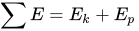
бо мурури вақт доимист. Чун бисьёри аз намуди қувваҳо консервативанд, ин қонун хеле нақши муҳим мебозад.
Табдилоти классикӣ[вироиш | вироиши манбаъ]
Биёед ба ду ситемаи сарҳисоб, S and S' менигарем. Бигзор (x,y,z,t) координатаи фазо-замони воқеа барои мушоҳиди системаи сарҳисоби S ва (x' ,y' ,z' ,t' ) координати фазо-замони ҳамон воқеа барои мушоҳиди S' бошад. Фарз мекунем, ки замон барои ҳамаи системаҳои сарҳисоб як хел чен карда мешавад. Агар дар ибтидои замон t = 0, x = x' бошад, он гоҳ муносибати координатаҳои фазо-замони ҳамон як воқеа дар системаҳои сарҳисоби S' ва S, ки нисбат ба ҳамдигар дар самти x бо суръати u ҳаракат мекунанд чунин аст:
- x' = x - ut
- y' = y
- z' = z
- t' = t
Ин маҷмӯъи формулаҳо табдилоти гурӯҳиро ташкил мекунад, ки ҳамчу табдилоти Галилеӣ ном гирифтааст. Ин гуна табдилот мавриди маҳдуди нисбияти махсус мебошад, ки суръати u аз суръати рӯшноӣ, c, батадриҷ хурд аст.
Таърих[вироиш | вироиши манбаъ]
Баъзе аз файласуфони греки қадим, ки аз ҷумлаи онҳо Арасту мебошад, шояд аввалин касоне будаанд, ки ғояи "ҳар як воқеа бо сабабе рух медиҳад" ро субот кардаанд. Эшон аз ҷумлаи касоне буданд, ки бовар доштанд принципҳои назарӣ дар фаҳмиши табиат ёрӣ мерасонад.
Таҷрибаи аввалини услуби илмӣ аз ҷониби олими тоҷик Берунӣ дар садаи XI ворид карда шудааст,[1]. Мафҳуми моменти ҷисм аз ҷониби Абӯалӣ ибни Сино ва боз чанд мафҳуми дигар дар асрҳои миёна аз ҷониби олимони исломӣ вуруд карда шудааст.[2][3][4][5]
Маҳдудият[вироиш | вироиши манбаъ]
Механикаи классикӣ танҳо барои ҷисмҳое ки суръаташон нисбатан аз суръати рӯшноӣ ба тадриҷ хурд, массаашон нисбатан ба массаи Офтоб хеле хурд ва ченакашон нисбатан ба ченаки атом хеле калонанд истифода бурса мешавад. Агар ҷисм бо суръати наздик ба суръати рӯсноӣ ҳаракат кунад, он гоҳ назарияи нисбияти махсус амал мекунад. Ва агар массаи ҷисм хеле калон ва ченакаш хурд бошад, он гоҳ назарияи нисбияти умумӣ амал мекунад. Ва барои ҷисмҳои ченакашон хеле хурд бошад механикаи квантӣ истифода бурда мешавад.
Адабиёт[вироиш | вироиши манбаъ]
- Feynman, Richard (1996). Six Easy Pieces. Perseus Publishing. ISBN 0-201-40825-2.
- Feynman, Richard; Phillips, Richard (1998). Six Easy Pieces. Perseus Publishing. ISBN 0-201-32841-0.
- Feynman, Richard (1999). Lectures on Physics. Perseus Publishing. ISBN 0-7382-0092-1.
- Landau, L. D.; Lifshitz, E. M. (1972). Mechanics Course of Theoretical Physics , Vol. 1. Franklin Book Company, Inc. ISBN 0-08-016739-X.
- Kleppner, D. and Kolenkow, R. J., An Introduction to Mechanics, McGraw-Hill (1973). ISBN 0-07-035048-5
- Gerald Jay Sussman and Jack Wisdom, Structure and Interpretation of Classical Mechanics, MIT Press (2001). ISBN 0-262-19455-4}
- Herbert Goldstein, Charles P. Poole, John L. Safko, Classical Mechanics (3rd Edition), Addison Wesley; ISBN 0-201-65702-3
- Robert Martin Eisberg, Fundamentals of Modern Physics, John Wiley and Sons, 1961
- M. Alonso, J. Finn, "Fundamental university physics", Addison-Wesley
Ин ҷоро низ нигаред[вироиш | вироиши манбаъ]
- Механик
- Механика
- Таърихи механикаи классикӣ
- Системаҳои динамикӣ
- Номгӯи мудоилаҳо дар механикаи классикӣ
- Номгӯи мудоилаҳо дар механикаи классикӣ
Шохаҳо[вироиш | вироиши манбаъ]
Пайванди беруна[вироиш | вироиши манбаъ]

|
Механикаи классикӣ дар Викианбор |
|---|
- Binney, James. Classical Mechanics (Lagrangian and Hamiltonian formalisms)
- Crowell, Benjamin. Newtonian Physics Бойгонӣ шудааст 25 апрели 2011 сол. (an introductory text, uses algebra with optional sections involving calculus)
- Fitzpatrick, Richard. Classical Mechanics (uses calculus)
- Hoiland, Paul (2004). Preferred Frames of Reference & Relativity
- Horbatsch, Marko, "Classical Mechanics Course Notes".
- Rosu, Haret C., "Classical Mechanics". Physics Education. 1999. [arxiv.org : physics/9909035]
- Schiller, Christoph. Motion Mountain Бойгонӣ шудааст 9 феврали 2004 сол. (an introductory text, uses some calculus)
- Sussman, Gerald Jay & Wisdom, Jack & Mayer,Meinhard E. (2001). Structure and Interpretation of Classical Mechanics Бойгонӣ шудааст 20 сентябри 2012 сол.
- Tong, David. Classical Dynamics (Cambridge lecture notes on Lagrangian and Hamiltonian formalism)
Эзоҳ[вироиш | вироиши манбаъ]
- ↑ Mariam Rozhanskaya and I. S. Levinova (1996), "Statics", in Roshdi Rashed, ed., Encyclopedia of the History of Arabic Science, Vol. 2, p. 614-642 [642]. Routledge, London and New York.
- ↑ Abdus Salam (1984), "Islam and Science". In C. H. Lai (1987), Ideals and Realities: Selected Essays of Abdus Salam, 2nd ed., World Scientific, Singapore, p. 179-213.
- ↑ Seyyed Hossein Nasr, "The achievements of Ibn Sina in the field of science and his contributions to its philosophy", Islam & Science, December 2003.
- ↑ Fernando Espinoza (2005). "An analysis of the historical development of ideas about motion and its implications for teaching", Physics Education 40 (2), p. 141.
- ↑ Seyyed Hossein Nasr, "Islamic Conception Of Intellectual Life", in Philip P. Wiener (ed.), Dictionary of the History of Ideas, Vol. 2, p. 65, Charles Scribner's Sons, New York, 1973-1974.